
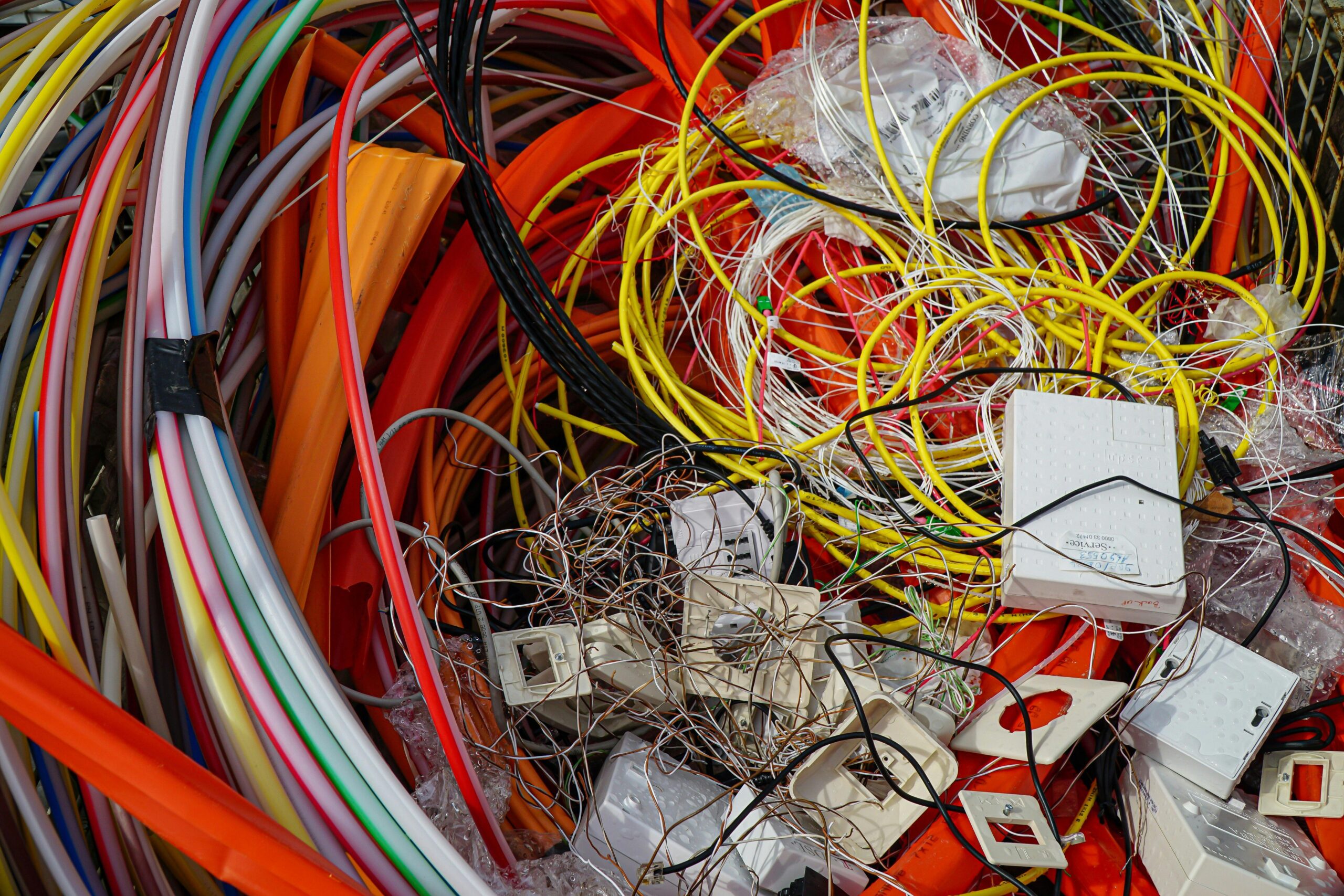
The pile of broken laptops in Loch Macfarlane’s garage looked like the aftermath of a particularly aggressive IT department purge. Cracked screens, orphaned keyboards, the gutted shells of desktop towers — all of it destined for careful disassembly by a kid who should have been studying for AP exams.
Macfarlane, a 17-year-old student at a Richmond high school, has spent the past two years building an electronics recycling operation that now processes enough dead tech to fill a small warehouse. His new partnership with a national nonprofit could transform what started as an entrepreneurial hobby into a legitimate competitor in a market dominated by industrial-scale operations.
“In terms of a future, I’d love to scale this up,” Macfarlane said. “This is not something that’s going to end when I go to college.”
The timing matters. Virginia generated an estimated 142 million pounds of electronic waste in 2024, according to state environmental data, and Richmond’s rapid growth in tech-adjacent industries means that number keeps climbing. Most of it ends up at one of three regional processors, where the economics favor volume over careful extraction of valuable materials like copper, gold, and rare earth elements.
Macfarlane’s model works differently. He collects devices directly from households and small businesses, then methodically strips them for components that larger recyclers often shred and sell as mixed scrap. A single smartphone contains roughly $1.50 worth of recoverable gold — trivial at industrial scale, but meaningful when you’re seventeen and reinvesting every dollar.
The nonprofit partnership, which Macfarlane declined to name before a formal announcement, would provide certified data destruction services and access to a network of corporate donors looking to offload retired equipment. For companies worried about hard drives containing sensitive information ending up in the wrong hands, that certification matters more than price.
Richmond’s e-waste landscape has long been a patchwork of municipal drop-off events, Goodwill bins that send most electronics to out-of-state processors, and a handful of certified recyclers concentrated in Henrico’s industrial corridors. The city itself offers no curbside electronics pickup and hosts collection events only quarterly.
That gap created Macfarlane’s opening. He started by posting on Nextdoor, offering free pickup for old computers and televisions. Word spread through the Fan and Museum District neighborhoods, then into the West End. By last fall, he was processing equipment from three Richmond-area private schools.
The question hanging over operations like Macfarlane’s is whether they can survive the transition from scrappy startup to regulated business. Virginia’s e-waste handling requirements include specific certifications, insurance minimums, and environmental permits that cost real money.
Macfarlane seems unbothered. He’s already mapped out a five-year plan that includes a physical location, employees, and expansion into Petersburg and Fredericksburg. The garage full of broken laptops, he insists, is just the beginning.
- Loch Macfarlane, 17, has built an electronics recycling business over two years and secured a partnership with a national nonprofit
- Virginia generated an estimated 142 million pounds of electronic waste in 2024
- The partnership will provide certified data destruction services and access to corporate equipment donors